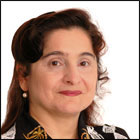
At the end of his three-day visit to Bosnia Herzegovina, Thomas Hammarberg has called for an end to the discrimination of national minorities in the country.
The Council of Europe’s Human rights Commissioner said: “Authorities in Bosnia and Herzegovina should end discrimination towards members of national minorities by bringing law and practice fully into line with human rights standards including the case-law of the European Court of Human Rights.
“The right to equality should be ensured for members of all ethnic groups.”
Showing posts with label discrimination. Show all posts
Thursday, 2 December 2010
Thursday, 26 August 2010
Interview: Miranda Vuolasranta, Executive Director of the National Finnish Roma Forum
| Miranda Vuolasranta |
I work for the National Finnish Roma Forum . It represents Roma in questions concerning human, fundamental and social rights, It has an important role in helping non-governmental organisations in their activities, strengthening cooperation and networking. I am also the Finnish representative and the Vice-Chairman of the European Roma and Travellers Forum.
2. How do you assess the level of discrimination in Finland?
There has been cooperation between the authorities and the Roma for 100 years when the first national Roma organisation was established and we’ve learnt how to cooperate smoothly through learning from mistakes.
However, the Roma are facing discrimination in their ordinary life. Almost 100% of the Finnish Roma women wear the traditional dress which distinguishes clearly the Finnish Kale (the Romani people living in Finland and Sweden) from the non-Roma and, therefore, discrimination is easy. They can find it difficult to access public places. Restaurants don’t allow them to enter or they are not served. These situations are very common and only the tip of the iceberg of cases that lead to reports of an offence or an investigation.
3. What specific challenges do Roma face in Finland?
The challenges are the same as elsewhere in Europe - combat anti-Gypsism and raise awareness of the Roma as a historical, traditional minority in Finland. Roma have the right to their own language and culture. By law., Roma language should be taught to Roma children in the schools and the media is obliged to produce information in Roma language but these laws have not clearly been resourced or executed.
4. What kind of challenges arise from the cultural differences between the Roma and non-Roma?
Finland has aimed for a homogeneous culture without diversity since independence. The Swedish speaking minority has been respected but the linguistic needs of the Roma and the Sami minorities were only addressed in the 70’s and the 80’s. It was forbidden to speak Roma in public places before. According to the Finnish Research Institute for the Languages of Finland, the Romani language is in danger of disappearing if teaching possibilities are not immediately increased and the Roma children are not guaranteed their right to study their mother tongue.
5. How would you describe the differences between the Roma communities in Finland and?
The old Finnish Kale community arrived in Finland in early 16th century. There are approximately 10,000 in Finland and 3,000 – 4,000 in Sweden. In addition, there is a Roma community of an estimated 500-1000 people from the Balkan countries, mainly Kosovo. These communities are very different. Dialect, dress and religion are related to the place of origin . Most Finnish Roma belong to the Evangelical Lutherans or follow free evangelical religions, whereas the Roma from the Balkan countries are Muslims or Orthodox. The similarities can be found in their cultural values and ethical norms.
6. What needs to be done at the national level to improve the situation of Roma?
Finland has been exemplary in many matters but to remove fear and prejudice, more work needs to be done to spread basic information on Roma language, culture, religion and history . Positive action such as development of education, employment and housing are recognised but suffer from a lack of resources.
7. How have cultural organisations and political groups responded to the challenges of diversity in Finland?
There are common goals but in practice the challenge of diversity has not yet been internalised in Finland. Swedish-speaking Finns and the Sami people work actively within their communities but there is no united diversity network.
8. How are Roma issues reported by the media in Finland?
It used to be common to stress the ethnic origin of Roma people involved in stories, but during the last couple of years there have been positive developments.
9. What role should the media play in promoting diversity in Finland?
The media, the Union of Journalists in Finland and Parliament should take a standpoint of antiracism, equality and diversity. The media should cover different minority groups equally and produce more documentaries and educational programmes about Roma culture, history, crafts and music.
10. How can the Council of Europe’s assist in the fight against discrimination?
I am worried about the changing attitudes among youth. The Roma used to have close links to people working in the countryside but in an urban, modern society attitudes have become harder and tolerance has decreased. People speak about diversity but in practice intolerance among youth has increased. They communicate and spend time only with similar people which reduces the ability to face diversity. Families, parents and schools should pay attention to the hardening attitudes and increase of intolerance.
Extremism in Europe is the main challenge for the Anti-Discrimination Campaign. The Council of Europe’s Dosta campaign, for example, has been very successful in reaching out to the general public.
Related articles by Zemanta
- Roma in Europe: Persecuted and misunderstood (cnn.com)
- Scapegoating will not solve 'Roma problem' | Rob Kushen (guardian.co.uk)
- Why do the Roma wander? (slate.com)
Friday, 20 August 2010
France Warned Over Roma Expulsions
![]() |
| Eleni Tsetsekou |
France returned some 70 people to Romania on 19 August following a pledge last month to close illegal camps. It says the Roma left voluntarily and the planned expulsions do not amount to mass deportations.
But Maria Ochoa-Llido, head of the Migration and Roma Division, told a BBC radio interviewer on 18 August that “collective expulsion of aliens” was prohibited under the human rights charter.
On 19 August, Eleni Tsetsekou explained to BBC World television viewers that France’s action created the impression of “mass punishment of a community.”
Robert Rustem of the European Roma and Travellers Forum told an Al Jazeera news bulletin that events in France highlighted the importance of a “civil rights for Roma” campaign.
21/08/10: Maria Ochoa-Llido interview with RSR [fr]
20/08/10: Maria Ochoa-Llido interview with France24 [fr]
Related articles by Zemanta
Thursday, 12 August 2010
Roma Turn To The Media In The Struggle For Civil Rights In Europe
![]() |
| Isabela Mihalache |
The order of Ms Mihalache’s biographical details is important. Ideally, her ethnicity should count as an incidental feature in a lifetime of achievement. She is all too aware however, that her Roma identity carries disproportionate significance.
As a face of the promotional film for the 2010 Roma Women Conference, which took place in Athens last January, Ms Mihalache hopes to challenge the clichéd and often negative perception of Roma people.
“We want to show a different face of Roma women, beyond the stereotypical image,” she says. “We want to appeal to people in a different way.
“We play with the stereotypical images of what Roma women represent by wearing traditional costumes and at the same time showing that the same people have careers and are as 'normal' as other people.
"I like to play with symbolism. It's an incentive for people to listen.”
Ms Mihalache, the deputy director of the Budapest-based European Roma Rights Centre, is happy to work with the media which she nonetheless accuses of fuelling centuries-old injustice.
“The media has a big responsibility to give equitable balance,” she says. “We are seen as an ethnic group, different from others. We have always been scapegoats of different interests
“There's no way you can avoid the stereotypes. Roma are portrayed as not wanting to work, living off social welfare, stealing, begging on the street and are not seen behind a desk, working with a computer.”
“I was not told when I was born that I was a Roma. I was told by other people that I was a gypsy. I always had a strong sense of who I was but I did feel awkward. You feel things can always turn in a wrong direction. You always have to be ready and prepared.”
As a 14 year old school girl, Ms Mihalache took refuge with neighbours while a mob in her home region of Constanta, Romania, attacked a Roma family in a nearby apartment. Marked by a childhood during which she was treated with suspicion even though her father was a local councillor who sought mayoral office, Ms Mihalache now uses her media profile to add momentum to the Roma community’s fight for full civil rights.
After two decades of success in winning over Europe’s political elites, activists now seek “full implementation” of citizenship at national level. That means greater political representation, the enforcement of anti-discrimination laws and improved access to employment, healthcare and education services.
“There are rights and obligations but once I am not acknowledged as a citizen, what responsibilities and obligations do I have?” asks Ms Mihalache.
“We are citizens of our countries but we have never been seen as such. I see problems with the state not taking its responsibility seriously to address the problems Roma are facing. The effect is what we see on the street - people feel free to act upon their beliefs."
These fears are encouraged by worsening levels of resentment and violence towards Europe’s 10 to12 million-strong Roma community.
However, Ms Mihalache remains optimistic about the outcome of the struggle for full citizenship but warns that it could be derailed easily by indifference and official neglect in favour of other priorities.
She adds: “We are working in the right direction but at this point we are not getting the right reaction. This is a test of European politics.”
Viewpoint: Europe's Roma Apartheid
Podcast: Romaphobia 2010
Related articles by Zemanta
- France starts removing Roma camps (bbc.co.uk)
- Scapegoating will not solve 'Roma problem' | Rob Kushen (guardian.co.uk)
- EU turning blind eye to discrimination against Roma, say human rights groups (guardian.co.uk)
- Roma voice missing from Dosta! campaign | Afua Hirsch (guardian.co.uk)
- Sarkozy Toughens on Illegal Roma (nytimes.com)
Tuesday, 10 August 2010
Focus on ECRI
The confinement and massacres of Jews and the slaughter and slavery in colonial territories defined an Apartheid system which for centuries received cultural sanction and religious indulgence.
The Nazi ‘Final Solution’ was a terrifying 'highpoint' of twentieth century prejudice. The later arrival of non-white immigrants in Europe gave another spur to bigotry.
Though racism and anti-Semitism survive to this very day, they are, by common consent, on the run. Better education, mass tourism, increased opportunities for social integration, marriage, the influence of cultural icons and a record period of peace and prosperity have combined to clear the public arena of overt expressions of prejudice.
This sea change in social attitudes has been accelerated by the increased vigilance of organisations and activists who have forced political and civil society to maintain the offensive against discrimination.
For the past 17 years, the independent European Commission Against Racism and Intolerance (ECRI) has been a key partner in this transformation. The human rights monitoring body advises the 47 members states of the Council of Europe on policy measures needed to combat violence, discrimination and prejudice on the grounds of race, colour, language, religion, nationality or national or ethnic origin.
In its comprehensive reports, ECRI examines in each country the legal framework for fighting racism and racial discrimination, its practical implementation, the existence of independent bodies to assist victims of racism, the situation of vulnerable groups in specific policy areas (education, employment, housing etc.) and the tone of political and public debate around issues relevant for these groups.
ECRI counts as one of its most important achievements the adoption of Protocol 12 of the European Convention on Human Rights. This prohibition of discrimination which entered into force in April 2005, ranks as a high water mark in the legal challenge to racism.
The fight against discrimination is not over, of course but the work of ECRI and others has forced racists to adapt to a changed social and political environment. Public declarations of racial prejudice in the virulent terms of the 1960’s and 1970’s are seldom heard. Instead, the basis for intolerance has shifted.
''There has been a move from biological racism to cultural racism,'' an ECRI spokeswoman revealed, highlighting the new frontier in racist discourse.
She also pointed to a trend by governments towards discrimination in the name of integration and reverses of recent anti-discrimination gains, springing from the 'War On Terror,' as significant challenges to social cohesion.
The plight of Roma communities in Europe is another important concern. Already, the organisation has succeeded in gaining traction for its view that 'Roma-phobic' stereotyping is as unacceptable as racism.
''The media is doing good work in explaining the Roma situation with objective reports,'' the ECRI spokeswoman added. ''Roma can have the nationality of a country but do not take part in the life of the country. Political participation is a natural consequence of having real roots in a society. Roma should be encouraged to express themselves.''
ECRI’s policy advice and its educational work have helped to swing opinion in favour of the understanding that bigotry is as much a problem for the majority as it is blight on the affected minority.
''Everyone is endangered by discrimination,” the ECRI spokeswoman added. “No one can feel safe. Societies built on hatred do not work. Discrimination just doesn’t make sense.''
Related articles by Zemanta
- Scapegoating will not solve 'Roma problem' | Rob Kushen (guardian.co.uk)
- You: Wave of evictions threatens Gypsies (guardian.co.uk)
- EU turning blind eye to discrimination against Roma, say human rights groups (guardian.co.uk)
Monday, 2 August 2010
Roma Holocaust / Pharraimos Remembrance Day
This was the message of Rudko Kawczynski, President of the European Roma and Travellers Forum today at a commemoration event at the Council of Europe in Strasbourg, France.
A minute's silence marked the deaths of the many thousands of Roma and Sinti people killed at the Aushwitz death camp on 2 August 1944.
Kawczynski said the holocaust, known as the Pharraimos, had affected greatly the Roma community.
“The Holocaust was a monumental crime," he added. "We approach life with fewer illusions.
“It's been a long struggle. Roma suffering went largely unnoticed for decades as nations pursued racist practices against Roma and Sinti.
“This holocaust memorial has a role to play in combating anti gypsyism. Racist ideologies have not vanished from our world. The suffering of millions should not be in vain."
European Roma And Travellers Forum
Council of Europe marks the Roma genocide
Related articles by Zemanta
- Neo-Nazis hack into Buchenwald concentration camp website (newsinfo.inquirer.net)
- Budget undermines progress on Roma inclusion | Ethel Brooks (guardian.co.uk)
Subscribe to:
Posts (Atom)